Property Rights Alliance
The International Property Rights Index (IPRI) is the flagship publication of Property Rights Alliance (PRA). The IPRI scores the underlying institutions of a strong property rights regime: the legal and political environment, physical property rights, and intellectual property rights. It is the world’s only index entirely dedicated to the measurement of intellectual and physical property rights. Covering 121 countries, the 2026 IPRI reports on the property rights systems affecting 97 percent of the world’s gross domestic product (GDP) and 93 percent of the world’s population.
A tool for policymakers, business communities, and civic activists, the IPRI highlights the essential role property rights play in creating a prosperous economy and just society. In addition, the 2026 Index examines the robust relationship between property rights and other economic and social indicators of well-being, including gender equality, innovation, competition, prosperity, research and development, human development, open data, and measures of internet connectedness.
This year, 133 international organizations from 72 countries partnered with the PRA in Washington, D.C., along with its Hernando De Soto Fellow, Prof. Sary Levy-Carciente, to produce the 20th edition of the IPRI.

 A Letter From
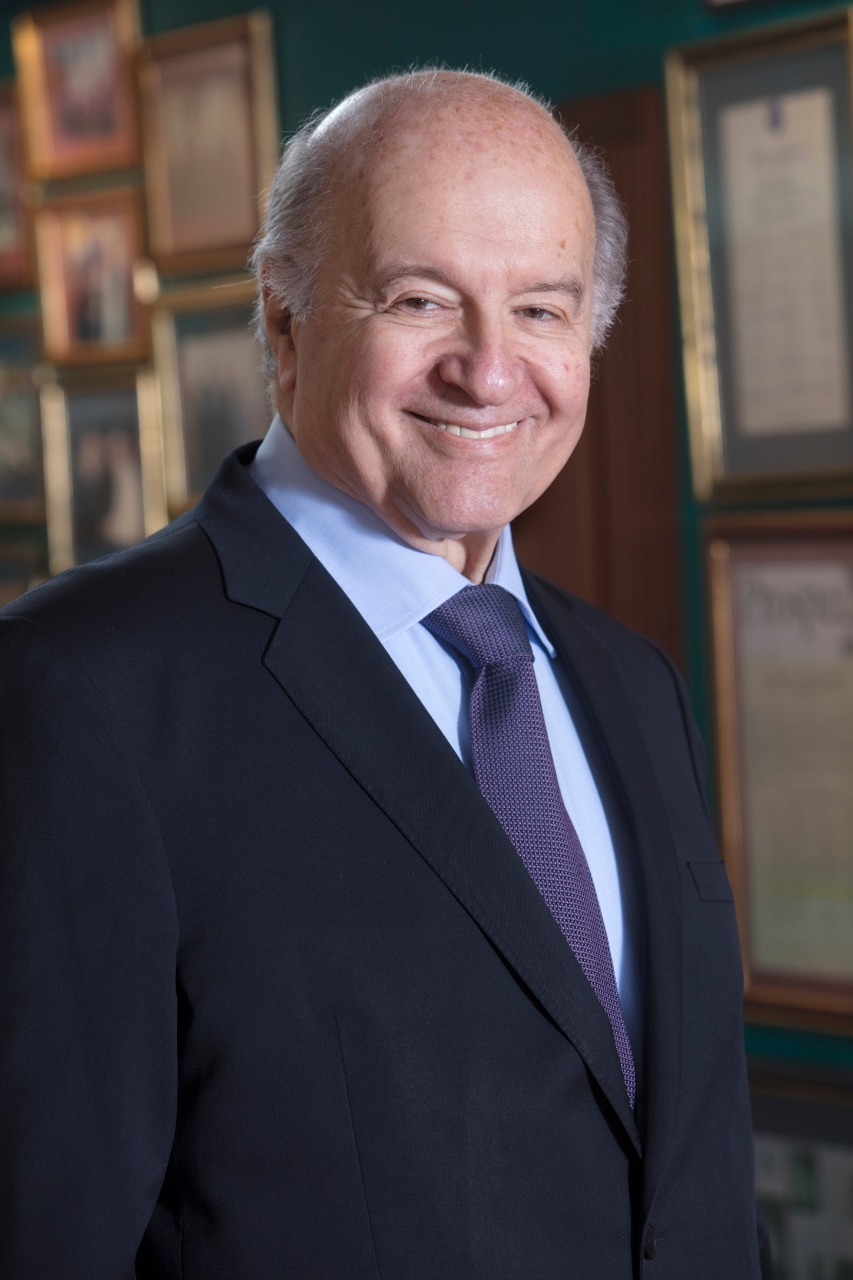
Hernando de Soto
In 2026, we commemorate the 250th anniversary of the pivotal milestones of 1776, Thomas Paine’s Common Sense, the American Declaration of Independence, and Adam Smith’s Wealth of Nations. Together, they established that human progress, dignity, and prosperity depend on individual autonomy and strong property rights. As Smith noted, liberty flourishes only when individuals know their efforts are safe from confiscation. Echoing James Madison, property rights are the primary safeguard of freedom: "as a man is said to have a right to his property, he may be equally said to have a property in his rights."
Property rights are not merely economic metrics; they are the safeguards of human liberty
Thanks to the work of Dr. Sary Levy-Carciente, the Hernando de Soto Fellow for 2026, and Lorenzo Montanari, the Executive Director of the Property Rights Alliance, we proudly present the 2026 International Property Rights Index (IPRI). The continuous efforts to expand the index’s analytical breadth, incorporating population-weighted dynamics, women's rights integration, property tax adjustments, detailed correlations with multiple variables and cluster analyses, ensure that the information provided by the index remains relevant and actionable for decision-makers worldwide.
Evaluating 121 countries, representing 93.32% of the world population and 97.37% of global GDP, the 2026 IPRI average score rose 4.21% to 5.35, driven by gains in Physical (10.07%) and Intellectual Property Rights (3.83%). However, overall institutional security remains 6.86% below its 2018 peak due to a decline in Political Stability.
My lifelong research has demonstrated that formal property rights are the essential key to unleashing human potential, and the 2026 index reaffirms this truth with striking clarity: nations in the top quintile command an average per capita income 17 times higher than those in the bottom quintile. However, I am deeply concerned by the demographic disparity revealed in the data, which shows that 83.1% of the global population resides in 70 nations where property systems remain weak or moderate, causing the population-adjusted score (IPRI-Pop) to drop to 4.98. Furthermore, by incorporating women rights (IPRI-GE) into our analysis, we see clearly that eliminating legal and cultural barriers for women is indispensable to expanding property ownership and economic inclusion.
As technology advances into complex digital supply chains, our central challenge is adapting classic safeguards to protect individual initiative against state overreach and informal exclusion. Looking to the future, I invite policymakers, scholars, business leaders, and civil society advocates to delve into the findings of the 2026 International Property Rights Index and use it for institutional reforms and reaffirm our collective commitment to securing the liberty, property, and flourishing of all humankind.
Hernando de Soto
President
Lorenzo Montanari
Lorenzo Montanari, is Executive Director of the Property Rights Alliance (PRA), an advocacy group/think tank based in Washington, DC USA, affiliated to Americans for Tax Reform, committed to the protection of physical, legal and intellectual property rights around the world. At Property Rights Alliance, Lorenzo is in charge of publishing and editing the International Property Rights Index, an international comparative study focus on intellectual and physical property rights. Previously, he worked for a public affairs firm and at the international department of the GSPM/George Washington University in Washington, DC and as a political analyst and electoral observer in Latin America for European Union. Lorenzo holds a BA in Political Science and in International Relations from the University of Bologna and MA in Political Management from the George Washington University. He collaborates with Forbes.
Philip Thompson
Philip Thompson is a Policy Analyst at Tholos Foundation specializing in international intellectual property legislation and trade policy, in addition, Philip also supports the International Property Rights Index an annual publication of PRA. Before joining Tholos/PRA Philip coordinated youth community development programs in the U.S. and the Caribbean for five years, he has also interned at the American Legislative Exchange Council's foreign affairs task force and at the Cato Institute’s trade policy center. Philip holds a BA in International Conflict and Resolution and an MA in International Commerce and Policy, both from George Mason University.
Dr. Sary Levy-Carciente
Sary Levy-Carciente is a Venezuelan economist with expertise in applied economics. She holds a Doctorate in Development Studies, a master’s in international economics, and a Specialization in Administrative Sciences. Now a Research Scientist at the Adam Smith Center for Economic Freedom, Florida International University, was President of the National Academy of Economic Sciences in Venezuela. Full professor at the Central University of Venezuela, where she was Dean of the Faculty of Economic and Social Sciences and Principal of its Research Institute. She won the prestigious Fulbright Research Fellowship at the Center for Polymer Studies at Boston University. She was a Visiting Researcher at the Department of Economics at the University of Massachusetts. She has been responsible for the calculation and analysis of the International Property Rights Index (PRA, Washington, DC) since 2015; and author and coordinator of the Index of Bureaucracy (Florida International University). She has numerous publications, is invited as a speaker at academic and professional conferences, and is frequently consulted by the media on economic issues.